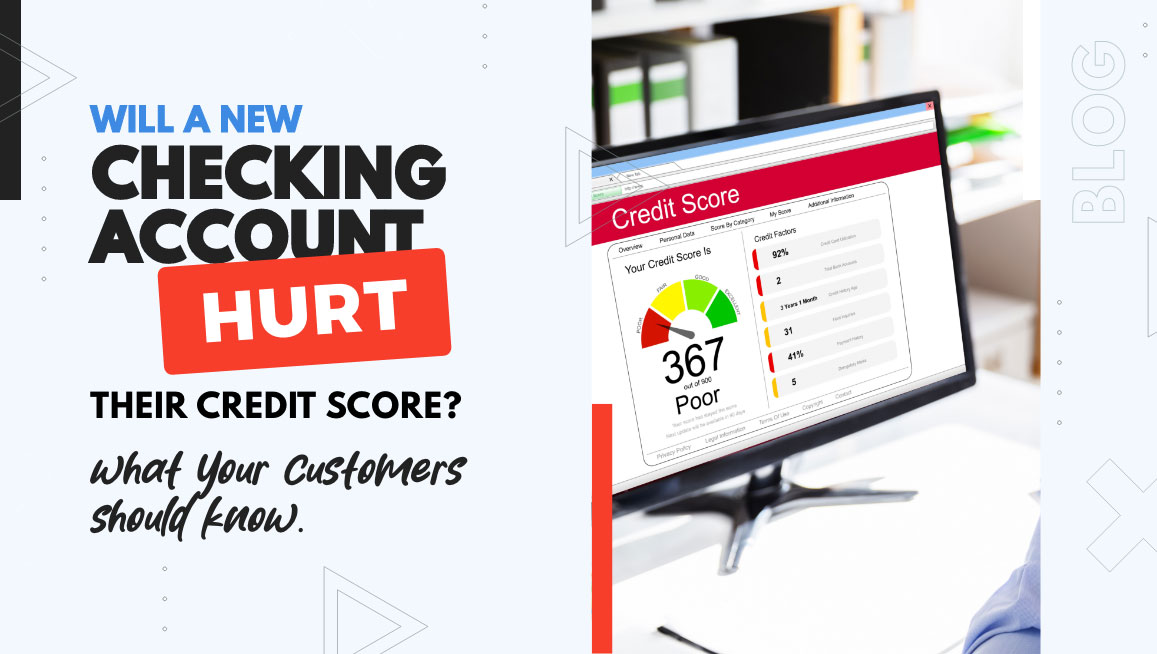
Will a New Checking Account Hurt Their Credit Score? What Your Customers Should Know
by Joshua Carmona
December 4, 2025
02:10 PM
As a credit repair professional, you’ve probably heard some version of this question many times:
“Does opening a checking account affect credit score?”
Your customers are confused because they hear different answers from banks, friends, and social media. Some think that every checking account application will destroy their credit score. Others assume a new bank account will magically boost their credit. Both ideas are oversimplified, and your job as a credit repair business is to bring clarity, education, and compliance to the conversation.
In this blog, we’ll break down exactly how a new checking account, savings account, and other banking activity may or may not affect a customer’s credit score. More importantly, we’ll focus on how you, as a credit repair business owner, can turn this into a powerful credit repair education opportunity—while staying aligned with credit repair laws and leveraging credit repair business software like ScoreCEO to systemize your operations.
Does Opening a Checking Account Affect Credit Score? What Your Team Should Explain First
The first thing your team needs is a clear, consistent message. When a client asks, “Does opening a checking account affect credit score?” you don’t want five different staff members giving five different versions of the answer. That inconsistency can create confusion, complaints, and even regulatory risk.
The short, compliant answer
Generally speaking, opening a checking account does not directly impact a credit score in a major way, but it can involve a credit inquiry—and depending on how the bank structures the product, it may have indirect effects.
Key concepts your team should understand and explain:
- Soft inquiries vs. hard inquiries
- Many banks use a soft inquiry to verify identity or check banking history. Soft inquiries do not affect a credit score.
- Some banks may use a hard inquiry, especially if the checking account is linked to an overdraft line of credit or other credit product. Hard inquiries can slightly impact the credit score for a short period.
- ChexSystems and similar databases
- Often, banks look at ChexSystems or other deposit-account databases instead of pulling a full credit report.
- These checks are not the same as a major-bureau credit pull and usually don’t affect the customer’s credit score at all.
- When banking products are actually credit products
- If a checking account includes an overdraft line of credit or a formal credit facility, that part may be reported as a credit account.
- In that case, poor management—missed payments, overdraft abuse, or charge-offs—can hurt the credit score over time.
What this means for your credit repair business
From a B2B perspective:
- Your team should be trained to say something like:
- “In many cases, opening a checking account does not significantly impact a credit score. However, some banks may do a hard inquiry or attach credit products, and those can have a small, temporary effect.”
- You should never guarantee that no impact will occur, because each bank’s process is different.
- You can encourage clients to ask the bank whether they use a soft or hard pull and whether any line of credit is attached.
By standardizing this message and documenting it in your credit repair business scripts, you reduce the risk of miscommunication while delivering consistent credit repair education across your entire team.
How Checking, Bank, and Savings Accounts Really Show Up in a Credit Report
To meaningfully answer “does opening a checking account affect credit score,” your staff must understand how different types of accounts show up (or don’t show up) on a credit report.
Most checking and savings accounts don’t report like credit accounts
Standard deposit accounts—like a regular checking account, bank account, or savings account—are not credit lines. They hold money rather than extend it. Because of that:
- They usually do not appear as trade lines on a traditional credit report.
- Simply maintaining a savings account with a $5,000 balance usually won’t improve a customer’s credit score.
- Closing a basic checking account in good standing typically won’t hurt the credit score either.
This is an important part of credit repair education: you can explain to clients that healthy banking habits are crucial for overall financial health, but they don’t automatically translate into higher credit scores.
When deposit accounts can indirectly hurt the credit score
Even though a checking account isn’t normally reported as a trade line, certain negative events can indirectly impact the credit score:
- Overdrafts linked to a line of credit
- If the checking account is connected to a formal overdraft line of credit, that credit line may appear on the credit report.
- Repeated overdrafts, late payments on the overdraft, or failure to repay can damage the credit score.
- Unpaid fees that go to collections
- If a bank account is closed with a negative balance or unpaid fees, the bank might send the debt to a collection agency.
- Once that collection is reported, it can significantly harm the client’s credit score.
- Forced closure for misuse or fraud flags
- In some cases, misuse of a checking account leads to a negative record in ChexSystems or similar databases.
- While this isn’t always reflected directly in the credit score, it can make it harder for the client to open new accounts, which impacts their ability to manage finances effectively.
How to use this insight in your service model
This is where your role as an educator becomes critical. Your team can use credit repair education sessions to explain:
- Why clients should avoid leaving a checking account or savings account negative.
- How to respond if they receive notices about unpaid banking fees.
- Why they should reach out before a negative bank account issue escalates to collections.
Inside ScoreCEO—or any robust credit repair business software—you can:
- Add notes about a client’s banking history.
- Track instances where unpaid fees created collection accounts.
Credit Repair Laws You Must Consider When Answering Banking Questions
Answering “does opening a checking account affect credit score” is not just a matter of knowledge—it’s also about compliance. Credit repair businesses operate in a heavily regulated environment, so your messaging around checking accounts, bank accounts, and credit scores must respect several key laws.
Quick note: This section is for educational purposes only and does not constitute legal advice. Always consult a qualified attorney about your specific obligations.
CROA: Credit Repair Organizations Act
CROA governs what you can say and do as a credit repair business. In the context of checking accounts:
- You cannot make false or misleading claims about the impact of opening a checking account on a credit score.
- For example, promising that “opening this specific checking account will raise your credit score by 50 points” could be risky and misleading.
- You must provide clear written disclosures about your services and avoid implying that you control the bank’s approval process or reporting practices.
- Any marketing or verbal claims about “credit-building accounts” connected to checking products must be carefully reviewed for accuracy.
FCRA: Fair Credit Reporting Act
The FCRA regulates how credit information is reported and used. When your team discusses whether opening a bank account or savings account affects a credit score, they should understand:
- You can help clients review and dispute inaccurate information on their report, including collection accounts originating from bank fees.
- You must not claim that you can remove accurate negative information related to banking collections simply because a client “needs a clean slate.”
- When you reference inquiries, trade lines, or collections tied to a checking account, you need to be precise and fact-based.
FDCPA and UDAAP considerations
- The FDCPA governs debt collection practices. While you may not be a collector, you should avoid advising clients to ignore legitimate debts from a closed bank account that went to collections.
- UDAAP (Unfair, Deceptive, or Abusive Acts or Practices) concerns can arise if your communications about banking products are deceptive or confusing.
Turning “Does Opening a Checking Account Affect Credit Score” Into a Teachable Moment
The question “does opening a checking account affect credit score” is more than a compliance risk—it’s also a coaching opportunity. Every time a client asks this, your team can use it to strengthen your relationship and position your company as a trusted advisor.
Step 1: Acknowledge the question and reduce anxiety
Many clients are nervous when they ask if a new checking account will hurt their credit score. Train your team to respond calmly:
“That’s a great question, and you’re not alone—many people wonder if opening a checking account affects credit score. Let’s walk through how it really works.”
This approach:
- Respects the client’s concern.
- Shows that you prioritize credit repair education.
- Opens the door to a deeper, more strategic conversation.
Step 2: Explain the basics with simple language
Your staff should have a clear, simple explanation ready:
- Deposits accounts (checking account, bank account, savings account) usually don’t appear directly on the credit report.
- Some banks do a hard inquiry, which may slightly affect the credit score for a short period.
- The bigger risk is what happens after: unpaid overdrafts, fees sent to collections, or misuse of overdraft lines of credit.
Use bullet-point summaries in your credit repair business software scripts so agents don’t forget the key points.
Step 3: Connect the answer to healthy money management
Turn the conversation into actionable guidance:
- Encourage clients to:
- Keep a small cushion in their checking account to avoid overdrafts.
- Regularly transfer small amounts to a savings account for emergencies.
- Immediately address any negative balance notices from the bank.
- Help them see the link between banking behavior and credit:
- Poor management → overdrafts → collections → lower credit score
- Responsible use → fewer emergencies → more stable financial life → easier credit repair
Step 4: Document and track banking-related coaching in ScoreCEO
Within ScoreCEO, you can:
- Create a coaching note template tagged “Checking Account / Banking Education.”
- Log when a client asked about whether opening a checking account affects credit score.
- Schedule follow-up tasks:
- Check for any new banking-related collections on the next credit report update.
- Offer an additional credit repair education session focused on banking and bill-pay habits.
By turning a simple question into a structured process, you move from reactive support to proactive coaching—powered by your credit repair business software.
Using Credit Repair Business Software to Track Banking-Related Risks and Opportunities
From a B2B perspective, your success doesn’t just depend on how well you answer “does opening a checking account affect credit score”—it also depends on how efficiently your team can track, systemize, and act on this information at scale. This is where a platform like ScoreCEO becomes crucial.
Centralizing client information
When a client mentions:
- A new checking account,
- A closed bank account with fees,
- Or a savings account they want to build,
you want that information stored in one hub. Inside your credit repair business software, you can:
- Add custom fields related to:
- Banking collections
- Overdraft lines of credit
- Checking account approval issues
- Tag clients who have a history of negative banking events so your team can monitor for related collections.
Automating follow-ups and tasks
You can use ScoreCEO to create automated workflows like:
- Create tasks when a credit report shows a new collection from a bank or credit union.
- Task example: “Review bank collection with client; explain how this ties back to checking account management.”
- Schedule regular education calls for clients who struggle with overdrafts.
- Coaching focus: building a small cushion in checking, using a savings account for emergencies.
- Send educational emails whenever a client asks “does opening a checking account affect credit score,” reinforcing the points discussed in your call.
Building SOPs, Disclosures, and Training Around Bank and Savings Account Questions
If your team hears “does opening a checking account affect credit score” regularly, you need formal processes, not just ad-hoc answers. That’s where standard operating procedures (SOPs), disclosures, and training programs come in.
SOPs for handling banking-related questions
Create a clear SOP, documented within your credit repair business software, that covers:
- How to respond when clients ask about a checking account or savings account and credit score.
- What not to say (no guarantees, no promises of score boosts from a new bank account).
- When to refer clients back to the bank for details about hard vs. soft pulls.
- How to document the conversation in the client’s file.
A simple structure might include:
- Step 1: Listen and clarify the client’s question.
- Step 2: Provide your standardized explanation.
- Step 3: Offer additional credit repair education on banking habits.
- Step 4: Log the interaction in ScoreCEO and set follow-up tasks if needed.
Disclosures and written guidance
Develop short written explanations that:
- Clarify that opening a checking account may involve a credit inquiry.
- Emphasize that banking products and reporting practices vary by institution.
- Explain that your role is to provide credit repair education, not to approve or deny banking products.
Store these disclosures in your credit repair business software:
- As email templates.
- As internal quick-reference scripted guides for your staff.
Training your team
Your team’s confidence will determine how well they handle these conversations. Consider:
- Training modules on:
- How deposit accounts differ from credit accounts.
- Common ways a bank account can indirectly hurt a credit score.
- Legal boundaries (CROA, FCRA, UDAAP) when discussing checking accounts.
- Role-play sessions:
- One person plays the client asking “does opening a checking account affect credit score.”
- The other uses your approved script and SOP.
- Refresher training:
- Update scripts and training whenever laws change or you refine your approach.
With strong SOPs and training—anchored inside your credit repair business software—you can ensure that every member of your team delivers consistent, compliant, and high-quality credit repair education when banking questions come up.
How ScoreCEO Helps You Deliver Better Credit Repair Education and Stay Compliant
Ultimately, the question “does opening a checking account affect credit score” is a small part of a much bigger picture: how you run your credit repair business, how you educate your clients, and how you stay compliant while scaling your operations.
Turning questions into structured education
With ScoreCEO as your credit repair business software, you can:
- Create standardized messages and scripts for common questions about:
- Checking accounts and credit scores
- Bank account collections
- Savings account strategies
- And more
- Deliver consistent credit repair education via:
- Automated email sequences
- Client portals
- Scheduled coaching calls and reminders
This not only improves client outcomes but also positions your brand as a trusted, professional partner.
Embedding compliance into daily operations
ScoreCEO helps you:
- Centralize client records, including notes about banking issues and questions.
- Store approved templates that your team must use.
- Track who communicated what, and when—crucial for demonstrating compliance with CROA, FCRA, and other regulations.
Instead of hoping your staff remembers the right way to answer “does opening a checking account affect credit score,” you build the right answer into your workflows.
Scaling a high-quality, law-aware credit repair business
When your systems, education, and compliance are integrated:
- Your team spends less time improvising and more time executing a proven process.
- Your clients get better credit repair education about checking accounts, bank accounts, savings accounts, and overall financial behavior.
- Your business becomes more scalable, predictable, and resilient.
Disclaimer: We provide compliance enablement and documentation workflows for credit-repair organizations, while responsibility for compliance and legal interpretation remains with the organization and its counsel.
Final Thoughts
Your customers will keep asking, “Does opening a checking account affect credit score?” The real opportunity is not just in answering the question once—it’s in building a repeatable, compliant, and educational process around that question.
By understanding how checking accounts, bank accounts, and savings accounts interact with credit, training your team on key credit repair laws, and using a robust credit repair business software like ScoreCEO to standardize your operations, you turn everyday confusion into long-term clarity, trust, and growth for your credit repair business.
FAQs
- Does opening a checking account affect credit score?
Usually no. It may only affect the score if the bank does a hard inquiry or adds a credit line. - Do checking and savings accounts show on a credit report?
No. Deposit accounts don’t show as trade lines, but related collections can. - Can overdrafts on a checking account hurt credit score?
Yes, if unpaid overdrafts or fees are sent to collections. - How can my credit repair business manage banking-related issues better?
Use credit repair business software like ScoreCEO to track bank collections and log client coaching. - Should we teach clients about bank account habits?
Yes. Including banking behavior in your credit repair education helps prevent future credit score damage.
References:
How Long Do Hard Inquiries Remain on A Credit Report?
Credit Repair Organizations Act
Fair Debt Collection Practices Act
Unfair, Deceptive, Or Abusive Acts Or Practices
How to Apply Tags to Customers in ScoreCEO
Keywords:
- does opening a checking account affect credit score
- credit score
- checking account
- bank account
- savings account
- credit repair education
- credit repair business software
Table of Contents
Explore More Insights
Dive deeper into a wealth of knowledge. Discover a multitude of articles covering diverse topics, expert perspectives, and the latest trends. Feed your curiosity and expand your understanding.